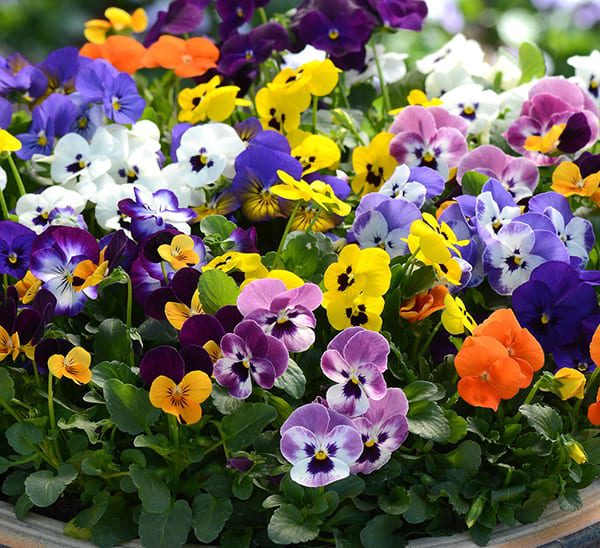

Viola, Assorted Colors
Viola, Assorted Colors
Viola, Assorted Colors — Plant Description
Plant Summary
Viola, Assorted Colors (Viola × wittrockiana and related hybrids) are cool-season flowering annuals grown for compact growth and a wide range of bloom colors including purple, yellow, white, blue, orange, and bi-color patterns. Gardeners researching how to grow Viola, Assorted Colors should provide full sun to partial sun, well-drained soil, and consistent moisture. Under proper Viola care and Viola growing conditions, plants provide reliable seasonal color in spring and fall.
Key Plant Facts
Height: 6–10 inches
Width: 6–12 inches
Sun: Full sun to partial sun
Water: Moderate
Annual or Perennial: Typically grown as a cool-season annual (short-lived perennial in mild climates)
Bloom Season or Seasonal Interest
Violas provide their strongest flowering display in cool weather. Blooming typically occurs from late winter through spring and again in fall where temperatures moderate. Flowers may slow or stop during intense summer heat.
Landscape Uses
Violas are widely used in borders, edging, mass plantings, containers, window boxes, and seasonal color beds. Their compact size makes them useful for filling gaps in mixed plantings and brightening early-season landscapes. Flowers may attract early pollinators.
Garden Design Value
Viola, Assorted Colors contribute low mounding structure and continuous color at the front of beds. They provide strong color contrast when paired with spring bulbs, ornamental kale, or cool-season annual companions. Their fine texture blends well into formal or cottage-style plantings.
Edible or Medicinal Uses
Viola flowers are considered edible when grown without chemical treatments and are sometimes used as garnishes or in salads. They are primarily grown for ornamental use.
Native Range
Hybrid garden origin derived from European Viola species.
Full Plant Description
Viola, Assorted Colors form compact clumps of soft green foliage topped with small to medium “face-type” flowers. Plants perform best in fertile, well-drained soil that retains moderate moisture but does not remain soggy. Regular watering supports steady flowering, especially in containers. Violas prefer cooler temperatures and benefit from partial afternoon shade in warmer climates to extend bloom performance.
Gardeners Also Ask
Is Viola an annual or perennial?
Most garden violas are grown as cool-season annuals, although they may behave as short-lived perennials in mild climates.
Do Violas need full sun?
They perform best in full sun during cool weather and partial sun in warmer conditions.
How big do Violas get?
Plants typically grow 6–10 inches tall and spread 6–12 inches wide.
Can Violas grow in containers?
Yes. They perform very well in containers with well-drained potting mix.
How often should Violas be watered?
Water when the top layer of soil begins to dry, maintaining evenly moist conditions without waterlogging.
Closing Line
Read our complete growing guide for Viola, Assorted Colors. (Click Here)
Required Notice
NOTICE: Live plants are natural products and vary in size, shape, and fullness depending on the season and stage of growth. Plants may be trimmed for shipping or to promote healthy development. Images shown represent the species or cultivar but may not reflect the exact plant shipped.
Customers are responsible for verifying that plants are permitted in their state. Orders intercepted or confiscated by agricultural authorities are not eligible for refund. By purchasing, you acknowledge our Live Plant Guarantee and Shipping Policy and Live Plant Shipping Policy.
Couldn't load pickup availability